A chimney cap is the metal cover on top of the flue; its job is to keep rain, snow, birds, and burning embers out while letting smoke exit. In Milford, wind off Long Island Sound is a common reason a cap fails,…
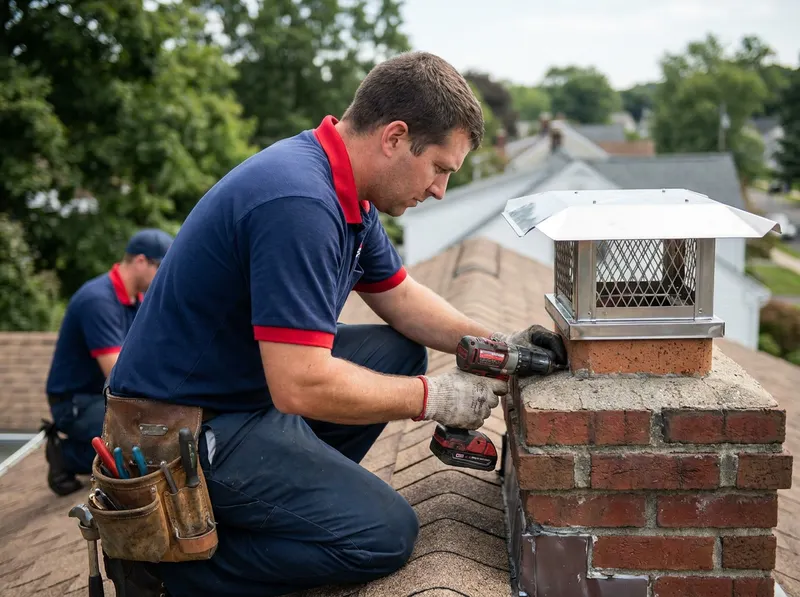
A chimney cap is the metal cover on top of the flue; its job is to keep rain, snow, birds, and burning embers out while letting smoke exit. In Milford, wind off Long Island Sound is a common reason a cap fails, homeowners in Walnut Beach, Woodmont, and Point Beach regularly report that a storm "blew my chimney cap back from my chimney," leaving the flue open. The Chimney Safety Institute of America (CSIA) lists a properly fitted cap as basic protection against water entry and flue-fire spread, and NFPA 211 references a spark arrestor (the mesh in the cap) where combustible material is nearby. A cap that has shifted, rusted through, or gone missing is exactly the kind of damage to the chimney cap that a sweep can look at and potentially fix.
The right fix depends on the cap and the crown under it. If a stainless or copper cap simply came loose in the wind and the metal is sound, the work is to reattach the chimney cap, resecuring the base to the flue tile or re-fastening the outside-mount flange, usually the lowest-cost outcome. If the cap is a thin galvanized-steel type that has rusted at the mesh or split at the seams, chimney cap replacement with a 304-stainless or copper cap lasts far longer in salt air, which matters at Bayview Beach, Fort Trumbull Beach, Laurel Beach, and Gulf Beach where corrosion runs faster than inland Rivercliff or Morningside. When the mortar crown beneath the cap is cracked, chimney crown repair is done first, because a failing crown lets water reach the flue and undermines whatever cap sits on top. Trade-off: reattaching an aging galvanized cap is cheaper today but often fails again within a few seasons, whereas a stainless replacement is a higher one-time cost that resists coastal rust.
How the visit runs, in order: 1) a look at the cap, mesh, flange, and crown, often with a Level 1 inspection of the accessible exterior; 2) a free on-site estimate stating whether reattachment or replacement fits and the price; 3) the work itself, refastening a sound cap or installing a new single-flue or multi-flue cap and sealing the crown as needed. If the cap loss also let water into the flue, or a chimney fire is suspected, a Level 2 inspection with a camera scan of the liner is the correct next step before relighting; that is an edge case beyond a cap-only job and is priced separately.
One point that prevents a common misunderstanding: a cap replacement is not a full chimney rebuild, it addresses the top few inches (cap, mesh, and crown), not the masonry stack or the liner. Same-day cap work is often possible in Devon and central Milford, but heavy rain, high wind, or an icy roof will push the job to safer conditions.
Every job gets a firm, written price after a free on-site visit.
Tell us about your chimney cap repair & replacement job in Milford and we'll send a clear, written quote, usually the same day.
 Fluepro Chimney Sweep