Chimney sweeping clears the flue liner and firebox of the creosote that builds up when wood burns cooler than a full draft, and NFPA 211 recommends a chimney inspection at least once per year. The Chimney Safety…
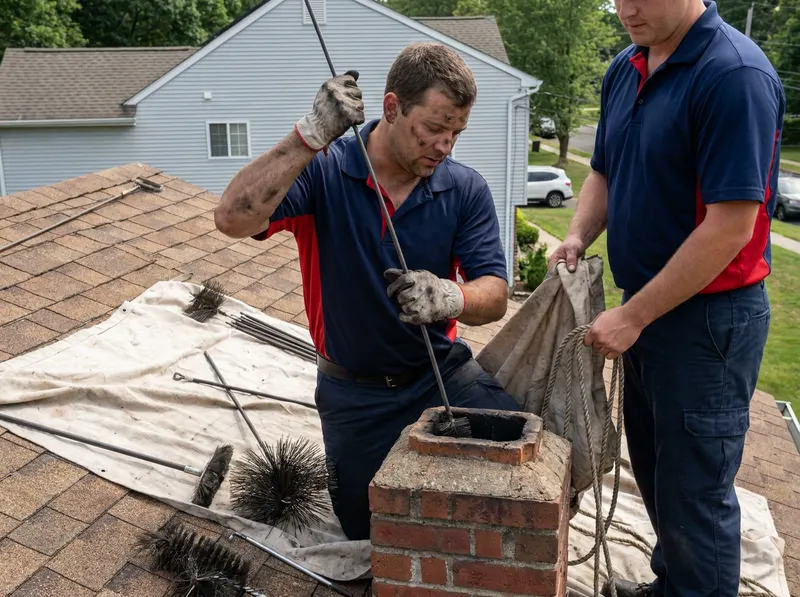
Chimney sweeping clears the flue liner and firebox of the creosote that builds up when wood burns cooler than a full draft, and NFPA 211 recommends a chimney inspection at least once per year. The Chimney Safety Institute of America (CSIA) sets the training standard many sweeps follow, and a routine cleaning in Milford pairs with a Level 1 inspection, the readily accessible visual check that applies when no changes to the system and no known problems are reported. A Level 2 inspection is the deeper standard, adding a camera scan of the flue interior, and it is called for after a chimney fire, a flue liner change, or before a property sale.
Decision-fit comes down to how the fireplace is used. A homeowner in Woodmont or Laurel Beach who burns seasoned hardwood a few nights a week fits a straightforward annual sweep with a Level 1 check. A woodstove insert running most of winter in Morningside or Rivercliff builds creosote faster and often warrants two visits a season. If the fireplace has sat unused for years in an older Devon or Fort Trumbull Beach home, a Level 2 camera inspection is the safer starting point because hidden liner cracks are common in flues that predate current code. The trade-off is time and price: a Level 1 sweep is quicker and cheaper, while a Level 2 adds roughly 30, 45 minutes and a camera fee but confirms the liner condition before you light a fire.
Coastal exposure matters here. Homes near Walnut Beach, Point Beach, Bayview Beach, and Gulf Beach face salt air and wind-driven rain off Long Island Sound, which rusts uncapped flue tops and lets moisture, leaves, and animals into the chimney. Chimney cleaning and cap installation are frequently done in one visit for these properties, the sweep clears the flue, then a stainless steel cap with mesh is fitted over the top to block rain, birds, and squirrels. Combining the two saves a second trip and one setup charge.
The process runs in order: 1) the technician lays drop cloths and seals the firebox opening to contain dust; 2) rods and a fitted brush scrub the flue from bottom or top; 3) a HEPA vacuum captures loosened creosote and soot; 4) the damper, smoke shelf, and firebox are checked; 5) a Level 1 visual inspection notes the flue, cap, and crown condition. A free on-site estimate is available for anyone who wants the price and scope confirmed before work begins. One clarification prevents surprises: a chimney sweep is a cleaning and inspection, not a repair, cracked liners, damaged crowns, or missing caps are quoted separately.
Every job gets a firm, written price after a free on-site visit.
Tell us about your chimney sweep & cleaning job in Milford and we'll send a clear, written quote, usually the same day.
 Fluepro Chimney Sweep