A masonry chimney fails in stages, and the repair matches the stage. Hairline cracks in mortar joints or the crown are the earliest problem; chimney crack repair and repointing rakes out the failed mortar and refills…
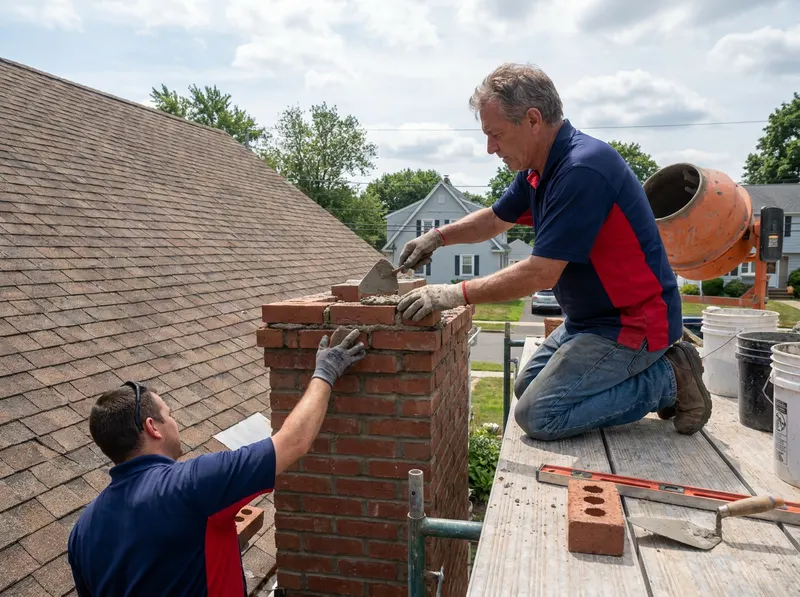
A masonry chimney fails in stages, and the repair matches the stage. Hairline cracks in mortar joints or the crown are the earliest problem; chimney crack repair and repointing rakes out the failed mortar and refills the joints, which stops water entry before it spreads. When a storm or fallen limb has "knocked about half the chimney down" and "put cracks in the rest of it," the damaged section is taken down to sound masonry and rebuilt. A full replacement of the chimney is reserved for structures that are cracked through, leaning, or unstable below the roofline.
Stone chimneys common on older homes near Rivercliff and along the Milford Harbor shoreline present a specific job: chimney stones resets. Freeze-thaw cycles and salt air off Long Island Sound loosen individual stones and wash out the bedding mortar. Resetting removes the loose stones, cleans the seats, and re-beds each one so the courses lock together again. This is different from a rebuild, the original stones are preserved and reused rather than replaced, which suits historic masonry in areas like Devon and Morningside.
Deciding between repair and rebuild depends on how much of the structure remains sound. If the cracking is confined to the crown or the top few courses, a chimney masonry repair or a rebuild of the top section is the fit. If cracks run the full height, or the chimney has separated from the house, a full chimney rebuild is the durable option, the trade-off is cost and 2 to 4 days of work versus repeated patching of a structure that will keep failing. Coastal exposure in Walnut Beach, Point Beach, Bayview Beach, Laurel Beach, Fort Trumbull Beach, and Gulf Beach accelerates mortar erosion, so a chimney showing widespread spalling near the water is more often a rebuild candidate than the same chimney inland.
Inspection follows recognized standards. NFPA 211 is the National Fire Protection Association code covering chimneys and vents; the Chimney Safety Institute of America (CSIA) defines the inspection levels. A Level 1 inspection reviews readily accessible portions during routine service; a Level 2 inspection is used after damage, a sale, or a system change, and includes video scanning of the flue. Storm or impact damage in Woodmont typically warrants a Level 2 look before scoping a rebuild, because internal flue cracks are not visible from the ground. Every rebuild in Milford is scoped from what the inspection documents, not a guess. A free on-site estimate measures the chimney and confirms the exact price and scope before any work is scheduled.
Every job gets a firm, written price after a free on-site visit.
Tell us about your chimney masonry & rebuild job in Milford and we'll send a clear, written quote, usually the same day.
 Fluepro Chimney Sweep